Does your kitchen cupboard look fine from the outside, but turn into a mess the moment you open it? You are not alone. Most kitchens slowly collect half-used packets, loose grocery bags, and items pushed to the back and forgotten. Over time, even the most well-designed kitchen can start feeling cluttered and stressful to use.
Wicker baskets offer a simple, practical way to organise dry storage without making the kitchen feel heavy or over-designed. They help bring order to dry storage without making the space feel heavy or over-organised. By grouping everyday items and keeping everything visible and easy to reach, wicker baskets make kitchens feel calmer, more functional, and far easier to live with on a daily basis.
Here’s how you can use wicker baskets to organise your dry storage and make your kitchen far more enjoyable to use.
Start With Decluttering, Not Baskets
Before adding any storage accessory, it helps if you reset the space. Empty the cabinet or pantry unit section where dry storage is planned. Check expiry dates, discard unused items, and group similar products together. This step alone often frees up more space than expected.
Once shelves are clean and clear, it becomes easier to decide how many baskets are needed and what size will work best. Wicker baskets are most effective when they replace clutter, not when they are added on top of it.
Categorise Dry Items for Daily Use
The biggest advantage of wicker baskets is how easily they support categorisation. Instead of mixing everything on a shelf, baskets allow each category to have its own defined space.
Common dry storage categories that work well in wicker baskets include:
- Grains and pulses like rice, dal, poha, and quinoa
- Snacks such as chips, biscuits, namkeen, and dry fruits
- Baking items like flour, sugar, cocoa, and sprinkles
- Breakfast supplies including cereals, oats, and bread
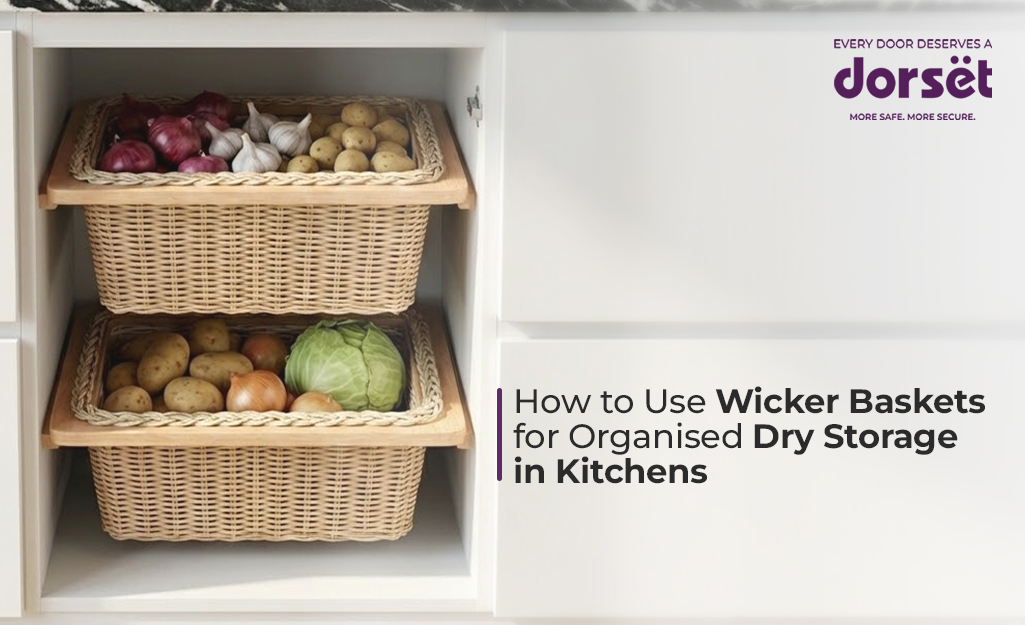
- Cooking essentials like onions, garlic, and potatoes
Grouping items this way reduces visual clutter and makes it easier to spot what needs refilling. It also avoids buying duplicates, which is a common issue in busy households.
Choose Basket Sizes Based on Usage, Not Shelf Size
One mistake people often make is choosing baskets only based on shelf dimensions. A better approach is to think about how frequently the items are used.
Larger wicker baskets work well for bulk items like onions, potatoes, or large snack packs. Smaller baskets are better for baking supplies or breakfast items that need more organisation.
Dorset’s I FORM wicker baskets are designed to fit into modular kitchen cabinets comfortably, making them suitable for both tall pantry units and base cabinets.
Use Breathable Storage Where It Matters Most
One of the key benefits of wicker baskets is natural airflow. Unlike plastic containers, wicker allows air to circulate, which helps keep certain dry items fresher for longer.
This is especially useful for:
- Onions and garlic, which spoil faster in closed containers
- Potatoes, which need dry, ventilated storage
- Bread and bakery items that can trap moisture
For items that may shed crumbs or powder, a simple cloth liner can be added inside the basket. This protects the basket while maintaining breathability.
Place Frequently Used Baskets at Easy Reach
Organisation should also provide you with convenience along with neatness. For this, wicker baskets should be placed based on how often they are accessed.
Daily-use items should be stored in lower shelves or pull-out units where they are easy to reach. Less frequently used items like extra baking supplies or festival snacks can be stored higher up.
When baskets are used inside pull-out pantry units, everything becomes visible in one motion. This reduces bending, searching, and rearranging, which is particularly helpful in compact kitchens.
Keep Storage Flexible With Labels or Visual Cues
While wicker baskets already make storage easier to understand visually, simple labels can add another layer of clarity, especially in shared households.
Labels help:
- Speed up grocery unloading
- Make it easier for everyone to find items
- Maintain organisation over time
Even without formal labels, consistent placement helps. When each basket has a clear purpose, it becomes easier to put things back in the right place.
Maintain Baskets With Minimal Effort
Wicker baskets are low maintenance, but a little care goes a long way. Regularly check stored items for spills or expired products. A quick wipe or light dusting keeps baskets clean and fresh.
Avoid placing wicker baskets near sinks or cooking zones where moisture and heat are high. They are best suited for dry zones like pantries, tall units, and base cabinets away from water.
When used correctly, wicker baskets age gracefully and continue to look good even with daily use.
Why Wicker Baskets Work So Well in Indian Kitchens
Indian kitchens often store a wide variety of dry items, from grains and spices to snacks and festival ingredients. Wicker baskets help manage it all without overcomplicating storage.
Dorset and their I FORM wicker baskets are designed to support how kitchens are actually used, not just how they look.
Making Dry Storage Feel Calm and Intentional
A well-organised kitchen feels lighter, even if the space is small. When dry storage is structured, cooking becomes smoother and cleaning becomes quicker.
Wicker baskets play a quiet but important role in this experience. They turn open shelves and deep cabinets into purposeful storage zones. Instead of loose packets and stacked containers, everything has a place.
When dry storage works well, the kitchen stops feeling cluttered and starts feeling considered. And that is exactly what kitchen organisation and modular kitchen accessories should achieve.