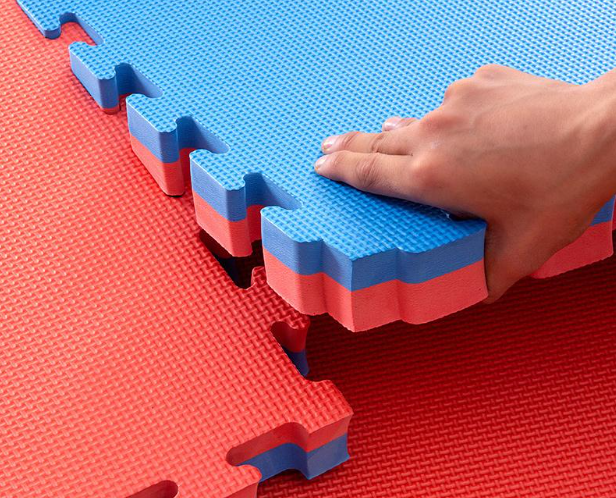
Small training spaces have to work harder than large ones. A spare room, garage, studio corner, or compact gym area may need to support warm-ups, stretching, fitness drills, light martial arts, children’s practice, and general floor work. The problem is simple: not every space can have permanent flooring installed.
That is one reason Jigsaw mats have become popular. They offer a flexible way to create a padded training area without rebuilding the room. The pieces connect together, so users can cover the space they need and change the layout when required. For small gyms and home studios, that kind of control is useful.
Their main appeal is easy setup. A person can lay the tiles across a floor, connect the edges, and create a training zone fairly quickly. This helps in rooms that serve more than one purpose. A home studio might be used for exercise in the morning and storage later in the day. A small gym might need to change the layout between classes. Interlocking mats make that easier than fixed flooring.
Storage is another advantage. When the space needs to be cleared, the tiles can be lifted and stacked. This is helpful for renters, home users, and small business owners who cannot make permanent changes to the floor. It also suits clubs that train in shared halls or community rooms. They can bring out the flooring for sessions and pack it away afterwards.
Comfort matters too. Hard floors can make floor-based training uncomfortable, especially during stretching, mobility work, or bodyweight exercises. A padded surface can reduce pressure on knees, hands, elbows, and feet. This does not mean every tile is suitable for every sport, but it can make general movement feel better and more controlled.
The modular design also helps with awkward spaces. Not every room is a neat square. Some have pillars, cupboards, doorways, or uneven usable areas. Interlocking tiles can be arranged around the shape of the room more easily than one large mat. This lets owners make better use of limited space without buying more floor cover than they need.
Small gyms often like the neat appearance as well. A clean, connected mat area can make a basic room look more organised. It gives members or clients a clear sense of where training happens. In home studios, it can also help separate the exercise area from the rest of the room. That simple visual boundary can make a space feel more intentional.
However, it is important to be realistic. Jigsaw mats are not automatically right for every activity. Some are made for light exercise and play. Others are built for more serious training. Thickness, density, grip, and surface texture all affect how the mat performs. A tile that works well for stretching may not be right for repeated throwing, heavy impact, or intense footwork.
Fit is also important. If the mats are not connected properly, gaps can appear. Loose edges may lift. The surface may shift if it is placed on a slick floor without enough grip underneath. For active training, the area should be checked before each use. This is especially important in small spaces where people may move close to furniture, walls, or equipment.
Cleaning should be part of the decision. Home users may only need a simple wipe-down routine. Small gyms may need more frequent cleaning because several people use the same surface. The top layer should be easy to maintain and suitable for regular contact with hands, feet, and sweat.
The best choice depends on the activity, not just the room size. A yoga corner, children’s play zone, boxing footwork area, and martial arts space may all need different levels of support. Buyers should think about who will use the mats, how often, and for what kind of movement.
Jigsaw mats are popular because they solve a real problem: they make small spaces more useful. They are flexible, easy to arrange, and practical for rooms that cannot have permanent flooring. Chosen carefully, they can turn an ordinary floor into a better training area without making the space feel locked into one use.